

How to Choose Drip Irrigation System - Complete Guide 2025
Drip irrigation is the most efficient watering method, saving up to 70% water compared to traditional methods. In this guide we'll examine in detail how to properly choose system for your plot.
What is drip irrigation and why is it better?
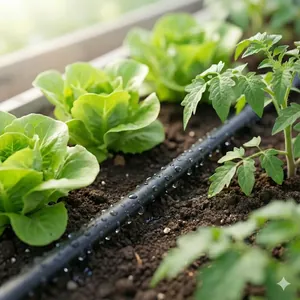
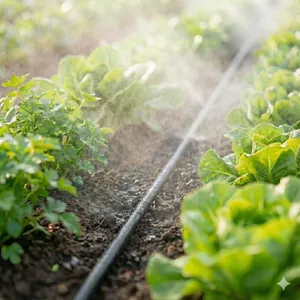
Drip irrigation is water delivery system directly to plant roots through special drippers or perforated tape. Instead of watering entire soil surface, water flows point-by-point, ensuring maximum efficiency.
Benefits
- Water savings up to 70%
- Reduced weed growth between rows
- Uniform moisture throughout season
- Automation possibility with timers
- Reduced plant diseases (no leaf moisture)
- Yield increase up to 30-40%
Disadvantages
- Requires initial investment
- Regular maintenance needed
- Dripper clogging with poor water quality
- Installation complexity for large areas
- Tape replacement every 2-3 seasons
Drip irrigation system types
1. Drip tape (most popular for gardens)
Flat polymer tube with built-in drippers. Laid along plant rows. Most economical option for gardens, greenhouses and berry fields.
Main characteristics:
- Wall thickness: 0.15-0.30 mm (thicker = more durable)
- Dripper spacing: 20-30 cm (depends on crop type)
- Water flow: 1-3 l/hr per meter of tape
- Service life: 1-3 seasons
- Working pressure: 0.4-1.0 atm
Recommended for:
Tomatoes, cucumbers, cabbage, peppers, potatoes, strawberries - any crops with row planting.
System cost
2. Drip hose (for perennial crops)
Rigid hose with built-in or external drippers. More durable than tape, suitable for orchards, vineyards, perennial plantings.
Main characteristics:
- Diameter: 16-20 mm
- Dripper spacing: 30-50 cm
- Flow rate: 2-4 l/hr per dripper
- Service life: 5-10 years
- Working pressure: 1.0-4.0 atm
Recommended for:
Apple trees, pears, grapes, currant bushes, roses, hedges - perennial plants with permanent location.
System cost
3. External drippers (individual watering)
Separate drippers installed on main pipe. Allow setting individual water flow for each plant. Ideal for container growing, greenhouses with different crops.
External dripper types:
Compensated
Maintain same water flow regardless of pressure. Ideal for slopes and long lines.
Flow rate: 2-8 л/год
Adjustable
Can manually change water flow for each plant. Universal for different crops.
Flow rate: 0-10 л/год
How to calculate required materials?
Drip tape calculation formula:
Row length × Number of rows + 10% reserve = Required tape length
Example 1: Vegetable garden 10×20 m
- Bed length: 20 meters
- Number of rows: 8 beds
- Calculation: 20 m × 8 = 160 m
- 10% reserve: 160m + 16m = 176m
- Need: 2 rolls of 100m or 1 roll 200m
Example 2: Greenhouse 3×8 m
- Bed length: 8 meters
- Number of rows: 4 beds
- Calculation: 8 m × 4 = 32 m
- 10% reserve: 32m + 3m = 35m
- Need: 1 roll 50m or 100m
What else needed besides tape?
Essential components:
- Main pipe 25-32mm (for connecting rows)
- Start fittings (tape connection to pipe)
- End caps (for closing tape ends)
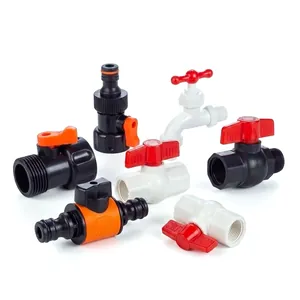
- Faucet for water connection
Recommended components:
- Disk filter (clogging protection)
- Irrigation timer (automation)
- Pressure reducer (if pressure > 2 atm)
- Fertilizer injector (plant feeding)
Step-by-step installation guide
Preparation and planning
- Draw site plan with bed dimensions
- Determine water connection point
- Calculate required materials
- Prepare tools: scissors, punch
Main pipe laying
- Lay 25-32mm pipe perpendicular to beds
- Connect to water source through faucet
- Install filter after faucet (mandatory!)
- Add pressure reducer if needed
Drip tape connection
- Make holes in main pipe (16mm punch)
- Insert start fittings in holes
- Attach drip tape to fittings
- Lay tape along rows drippers up
- Close tape ends with caps
Testing and setup
- Turn on water and check for leaks
- First 2-3 minutes flush system (remove caps)
- Put caps and check watering uniformity
- Set timer (if available): morning 6:00, 30-60 minutes
Common mistakes in selection and installation
Wrong
- Buy thinnest tape 0.15mm to save - lasts only 1 season
- Not install filter - drippers clog in week
- Lay tape drippers down - disrupts uniformity
- Make line longer than 100m - pressure drops, uneven watering
- Not drain water for winter - system bursts from frost
Right
- Choose tape 0.20-0.25mm - optimal price/quality, lasts 2-3 seasons
- Mandatory install 120 mesh disk filter after faucet
- Lay tape drippers up for uniform watering
- Divide long sections into zones of 50-70m each
- In fall drain water, blow with compressor, remove drippers
Drip irrigation system maintenance
Weekly
- Check watering uniformity
- Inspect for mechanical damage
- Identify clogged drippers
Monthly
- Filter flushing
- System flushing (remove caps)
- Check connections for leaks
- Clean clogged drippers
End of season
- Complete system flush
- Drain all water
- Blow with compressor
- Dismantle drippers for storage
Frequently asked questions
Which dripper spacing to choose - 20cm or 30cm?
Depends on crop. For dense plantings (carrots, onions, radishes) - 20cm. For tomatoes, cucumbers, cabbage - 30cm optimal. Universal option - 25cm suitable for most crops.
Is pump needed for drip irrigation?
If connection to water supply with pressure 0.5-1.5 atm - pump not needed. For watering from barrel need pump or raise barrel to height 1.5-2 meters to create pressure.
How long does drip tape last?
Depends on thickness: 0.15mm - 1 season, 0.20mm - 2 seasons, 0.25-0.30mm - 3-4 seasons. With proper use and winter storage. Some manufacturers give up to 5 years warranty on thick tape.
Can system be left in ground for winter?
Main pipes can be left after complete water drainage and blowing. Drip tape better remove - quickly fails from frost. External drippers must be removed.
How often and how long to water?
For most crops optimal: 1 time per day in morning (6:00-8:00) for 30-60 minutes. In heat - 2 times (morning + evening). Check soil moisture at 10-15cm depth - should be moist but not wet.
Need help choosing?
Our specialists will calculate irrigation system for your plot free and help choose equipment