

Greenhouse irrigation: drip, misting, micro-sprinklers — how to combine them
Which irrigation type to choose for tomatoes, cucumbers, and seedlings. Combining drip tape with misting for optimal microclimate.
3 zones
Irrigation
4 crops
Recommendations
180 min
Installation
+40%
Yield
Three types of greenhouse irrigation — when to use each
| Type | Purpose | Operating pressure | Flow | Cost per 10 m² |
|---|---|---|---|---|
| Drip tape | Tomatoes, cucumbers, peppers | 0.5–1.5 бар | 1.6–2.0 л/год на 20 см | 300–500 грн |
| Mist tape | Greens, seedlings, cooling | 1.0–2.5 бар | 5–15 л/год на м² | 400–700 грн |
| Micro-sprinklers | Seedlings, pots | 1.5–3 бар | 20–120 л/год на сопло | 500–900 грн') }} |
| Fogger mist (HP) | Microclimate, cooling | 4–7 бар | 4–15 л/год на сопло | 800–1500 грн |
Recommended system by crop
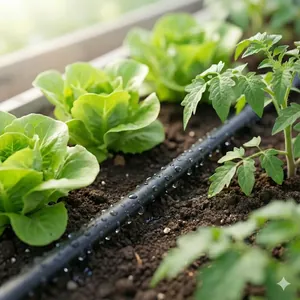
- Tomatoes: 8 mil drip tape, 20 cm spacing, 1.6 L/h flow rate. No overhead watering (risk of late blight). Air humidity 60–70%.
- Cucumbers: 8 mil drip tape + misting for cooling during heat. Air humidity 80–90%. Misting is triggered in bursts when the temperature exceeds 28°C.
- Peppers and eggplant: drip tape, no misting. Humidity 70–80%. Sensitive to micro-droplets on leaves (sunburn).
- Seedlings (trays): 360° micro-sprinklers or low-pressure misting. Uniform wetting of the entire tray volume without washing away soil.
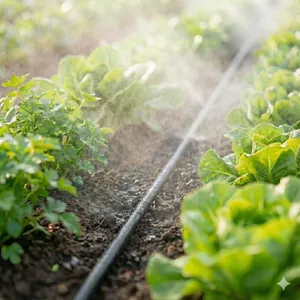
- Greens, lettuce: mist tape or micro-sprinklers. Frequent short cycles (1–2 min every 2 hours).
- Flowers, ornamentals: point PC emitters or micro-sprinklers. Do not wet the buds.
- Mushrooms (oyster, button): high-pressure misting only (fogger, 4–7 bar). Humidity 85–95%, no direct soil watering.
Combined system example (typical 6×20 m greenhouse for cucumbers)
- Zone 1 — Drip tape: 4 rows × 20 m = 80 m of 8 mil tape with 20 cm spacing. Connected via start connectors to a 25 mm mainline. 3 waterings/day for 20 min each.
- Zone 2 — Mist tape under the roof: 2 lines along the greenhouse length at 1.8 m height. Runs for 30 sec every 10 min when the temperature exceeds 28°C.
- Controller: Hunter X-Core 2-zone or Galcon AC-4S with a temperature/humidity sensor
- Filter: 120 mesh disc filter for drip + an additional 150 mesh before the misting line
- Pressure regulator: 1.5 bar for drip + a separate 2.5 bar line for misting
Common mistakes
- Overhead watering of tomatoes: sprinkler irrigation from above → droplets on leaves → late blight within 2–3 days
- One irrigation type for all crops: tomatoes and cucumbers require different air humidity. A single drip system for both is a compromise
- Watering with cold water: well water at 10°C → stress for heat-loving crops. A settling tank is needed to warm the water to 18–22°C
- Misting without ventilation: misting without top ventilation → 95%+ humidity → fungal disease. Supply and exhaust ventilation is mandatory
For commercial greenhouses 500+ m²
- Fertigation station with EC/pH automation (Netafim NetaJet, Priva Nutri-Ject) — critical for hydroponics
- Climate controller with sensors: temperature, humidity, solar radiation. Automatic control of irrigation + misting + ventilation
- Mat irrigation (drip mat, flood tables) for pots — uniform wetting without risk of overwatering
- Recirculation systems — drainage collection and reuse. Reduces water consumption by 30–40%
- High-pressure fogger at 50–80 bar for ultra-fine mist (8–15 µm) without wetting leaves — for cooling without condensation
- Standards: ASHRAE for greenhouse climate control, FAO-56 for evapotranspiration, ISO 9912 for filtration
Greenhouse irrigation equipment
Our catalog offers tape for beds, mist tape for overhead use, micro-sprinklers, and accessories.